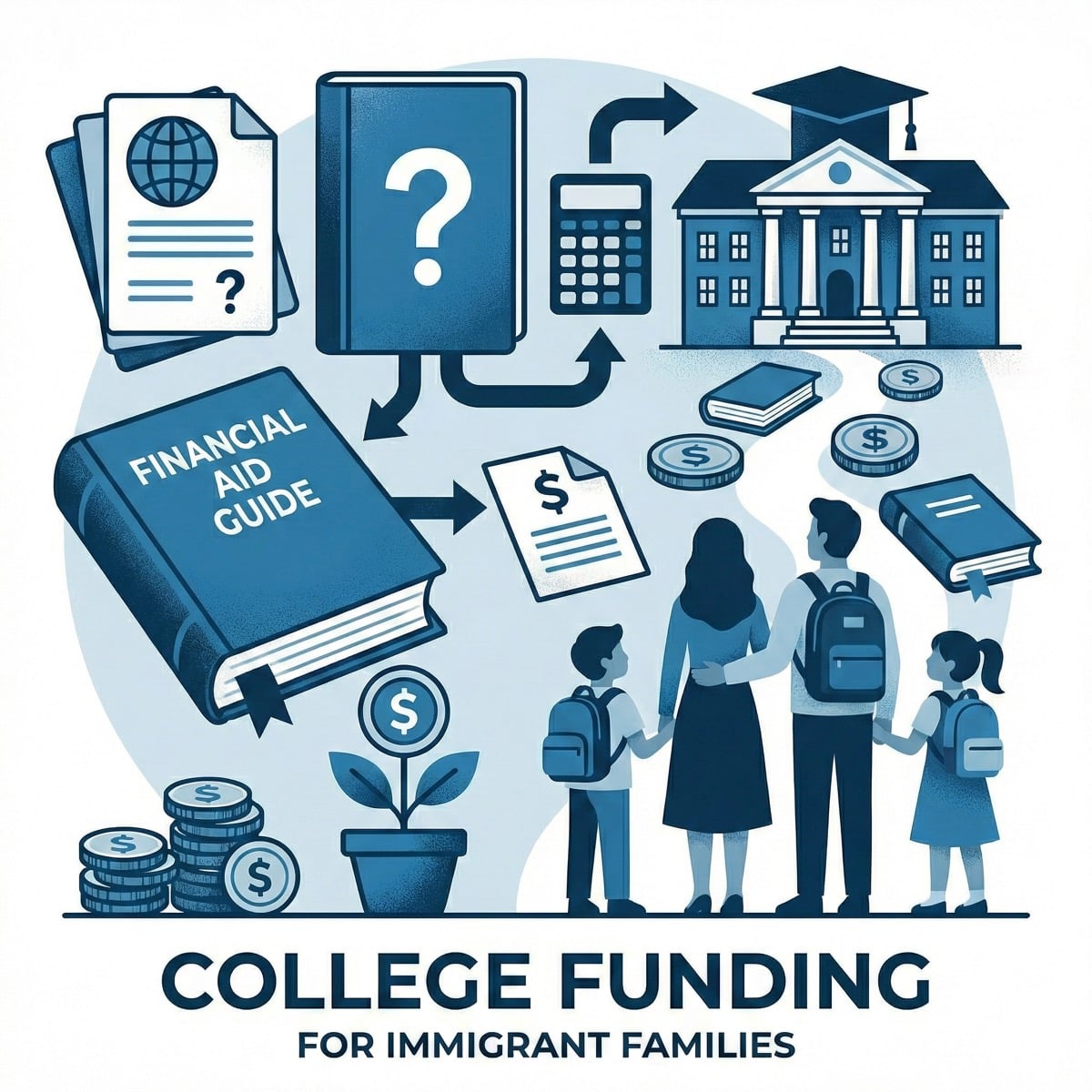
The College Dream: How Immigrant Families Can Afford Higher Education
⚠️ Disclaimer: This article is for educational and informational purposes only. It does not constitute financial, educational planning, or legal advice. Financial aid rules change annually and vary by institution. Always verify information with college financial aid offices, tax professionals, and qualified financial advisors. The author and Duti.co are not responsible for any actions taken based on this information.
Your child dreams of college. You dream of giving them opportunities you never had. But the price tag – $100,000-300,000 for four years – feels impossible. Here's the truth: college is expensive, but with the right strategy, immigrant families CAN afford it without destroying their financial future. This guide shows you how.
💰 The Real Cost of College (2025)
Cost Breakdown: What You're Actually Paying For
🏫 Public State University (In-State)
- Tuition & fees: $11,000
- Room & board: $12,000
- Books & supplies: $1,200
- Transportation: $1,500
- Personal expenses: $2,300
🎓 Private University
- Tuition & fees: $42,000
- Room & board: $15,000
- Books & supplies: $1,200
- Transportation: $1,000
- Personal expenses: $1,800
📋 Understanding FAFSA: The Key to Financial Aid
Who Can File FAFSA?
✅ Can File FAFSA
- ✓ US Citizens (born here or naturalized)
- ✓ Permanent Residents (green card holders)
✓ Certain Eligible Noncitizens:
- • T-visa holders (trafficking victims)
- • U-visa holders (crime victims)
- • VAWA self-petitioners
- • Some asylum/refugee statuses
❌ Cannot File FAFSA
- ✗ DACA (Deferred Action for Childhood Arrivals)
- ✗ Undocumented students
- ✗ F-1 student visa holders
- ✗ H-1B or other temporary visas
- ✗ TPS (Temporary Protected Status)
- • Some states have their own aid (CA, NY, TX, etc.)
- • Private scholarships don't require citizenship
- • Some colleges offer institutional aid
- • Check TheDream.US and other organizations
How Parent Immigration Status Affects Aid
Important: Student vs. Parent Status
| Student Status | Parent Status | Can File FAFSA? | Notes |
|---|---|---|---|
| US Citizen | Any status | YES | Parent status doesn't matter! |
| Green Card | Any status | YES | File without SSN for parents if needed |
| DACA | Any status | NO | Check state aid programs instead |
| Undocumented | Any status | NO | Private scholarships only |
💸 Types of Financial Aid Explained
🎁 Grants
- • Pell Grant: Up to $7,395/year for low-income
- • FSEOG: $100-4,000 extra
- • State grants: Varies by state
- • College grants: From the school
🎓 Scholarships
- • Merit: For grades/test scores
- • Need-based: For low-income
- • Identity-based: For minorities, women, etc.
- • Private: From organizations
💼 Work-Study
- • Part-time on campus
- • 10-20 hrs/week
- • $10-15/hour typical
- • Flexible schedule
- • Earn $2,000-4,000/year
💳 Student Loans
- • Federal: 4-6% interest
- • Subsidized: No interest in school
- • Unsubsidized: Interest always
- • Parent PLUS: Parents borrow (avoid if possible)
🎯 The Smart College Financing Strategy
The 2+2 Plan: Save $40,000-60,000
Community College → State University Transfer
- • Live at home (save $24k in room/board)
- • Low tuition ($4,500/year vs. $11,000)
- • Complete general education requirements
- • Small classes, personal attention
- • Work part-time, save money
- • Transfer with junior status
- • Focus on major coursework
- • University experience & networking
- • Degree says state university (not community college)
- • Same degree, less cost
💰 529 College Savings Plans: Should You Use One?
✅ 529 Plan Benefits
- ✓ Tax-free growth if used for education
- ✓ State tax deduction in some states
- ✓ Anyone can contribute (grandparents, relatives)
- ✓ High contribution limits ($300k+ lifetime)
- ✓ Minimal impact on financial aid if parent-owned
- ✓ Can change beneficiary to another child
❌ 529 Plan Drawbacks
- ✗ Penalties if not used for education (10% + taxes)
- ✗ Limited investment options vs. brokerage account
- ✗ State-specific plans with varying quality
- ✗ Less flexible than regular savings
- ✗ May affect aid if grandparent-owned
Should Immigrant Families Prioritize 529s?
Priority Order for Immigrant Families:
- 1. Emergency fund (3-6 months)
- 2. Retirement savings (15% of income minimum)
- 3. Pay off high-interest debt
- 4. Support aging parents (sustainable amount)
- 5. THEN 529 college savings if extra money
🎓 Scholarship Hunting Strategy
The $10,000 Scholarship Plan
- • Fastweb.com – Huge database
- • Scholarships.com – Match by profile
- • College Board – 2,300+ scholarships
- • Cappex – Personalized matches
- • Local community – Rotary, Lions Club
- • Parent's employer – Employee children programs
- • Ethnic organizations – Tibetan, Nepali, Bhutanese groups
- • Religious organizations – Church/temple scholarships
- • TheDream.US (DACA students)
- • Golden Door Scholars (undocumented)
- • Asian & Pacific Islander American Scholarship
- • Point Foundation (LGBTQ+)
- • Que Llueva Café (immigrants)
- • Jack Kent Cooke Foundation (high-achieving low-income)
- • QuestBridge (low-income to top colleges)
- • Horatio Alger (overcome adversity)
- ✓ Tell YOUR unique immigrant story authentically
- ✓ Specific details > generic statements
- ✓ Show resilience, not just hardship
- ✓ Connect your background to future goals
- ✓ Proofread carefully (grammar matters!)
- ✓ Have teacher/counselor review
- ✓ Reuse/adapt essays for multiple scholarships
📊 Sample Financial Aid Package
Real Example: Pema's Aid Package (State University)
| Cost of Attendance | Amount | |
|---|---|---|
| Tuition & Fees | $11,000 | |
| Room & Board | $12,000 | |
| Books & Supplies | $1,200 | |
| Personal/Transportation | $3,800 | |
| Total Cost | $28,000 |
| Aid Type | Amount | Type |
|---|---|---|
| Pell Grant (federal) | $6,500 | Free |
| State Grant | $2,000 | Free |
| University Grant | $4,000 | Free |
| Outside Scholarships (applied to 25) | $3,000 | Free |
| Work-Study | $2,500 | Earn |
| Federal Subsidized Loan | $3,500 | Loan |
| Federal Unsubsidized Loan | $2,000 | Loan |
🎯 Your Action Plan by Child's Age
- → Focus on YOUR retirement first
- → If extra money: Open 529 with $25-50/month
- → Ask grandparents to contribute to 529 instead of toys
- → Teach kids about saving and education value
- → Have "college talk" – expectations, costs, options
- → Encourage good grades (scholarships!)
- → Start visiting colleges for motivation
- → Student opens savings account, saves birthday/job money
- → Take PSAT (practice for SAT, qualify for National Merit)
- → Research colleges and costs together
- → Part-time job – save 50% for college
- → Join clubs, volunteer (scholarship essays!)
- → Take SAT/ACT (higher scores = more merit scholarships)
- → Apply to 8-12 schools (mix of reach/match/safety)
- → File FAFSA October 1 of senior year (EARLY!)
- → Apply to 20-30 scholarships (start summer before senior year)
- → Compare financial aid offers before deciding
💚 Final Thoughts
College is expensive, but it's also one of the best investments in your child's future. The key is approaching it strategically, not emotionally.
Remember These Principles:
🎓 Education is priceless, but debt is real – find the balance
🎓 Community college is smart, not shameful – save $40k+
🎓 Your retirement comes before their college – they can borrow, you can't
🎓 File FAFSA every year – even if you think you won't qualify
🎓 Small scholarships add up – 10×$500 = $5,000!
How are you planning to pay for your children's college? Share your strategies and questions in the comments!
Related Reading
Explore more articles that complement this topic:
- Retirement Planning for Two Generations -- Don't sacrifice retirement to fund college -- find the balance.
- Building Credit in America -- Good credit opens doors to better student loan options.